Thomas Jefferson, a portrait

Section II

Five sources for Jefferson.

For many of his sculptures, Petrides works from a living model — a family member, himself, or a commissioning patron. No such option exists here. Instead, from the many surviving images of Jefferson, he chose five — three paintings and two sculptures — deemed the best likenesses by Jefferson himself and by his family.

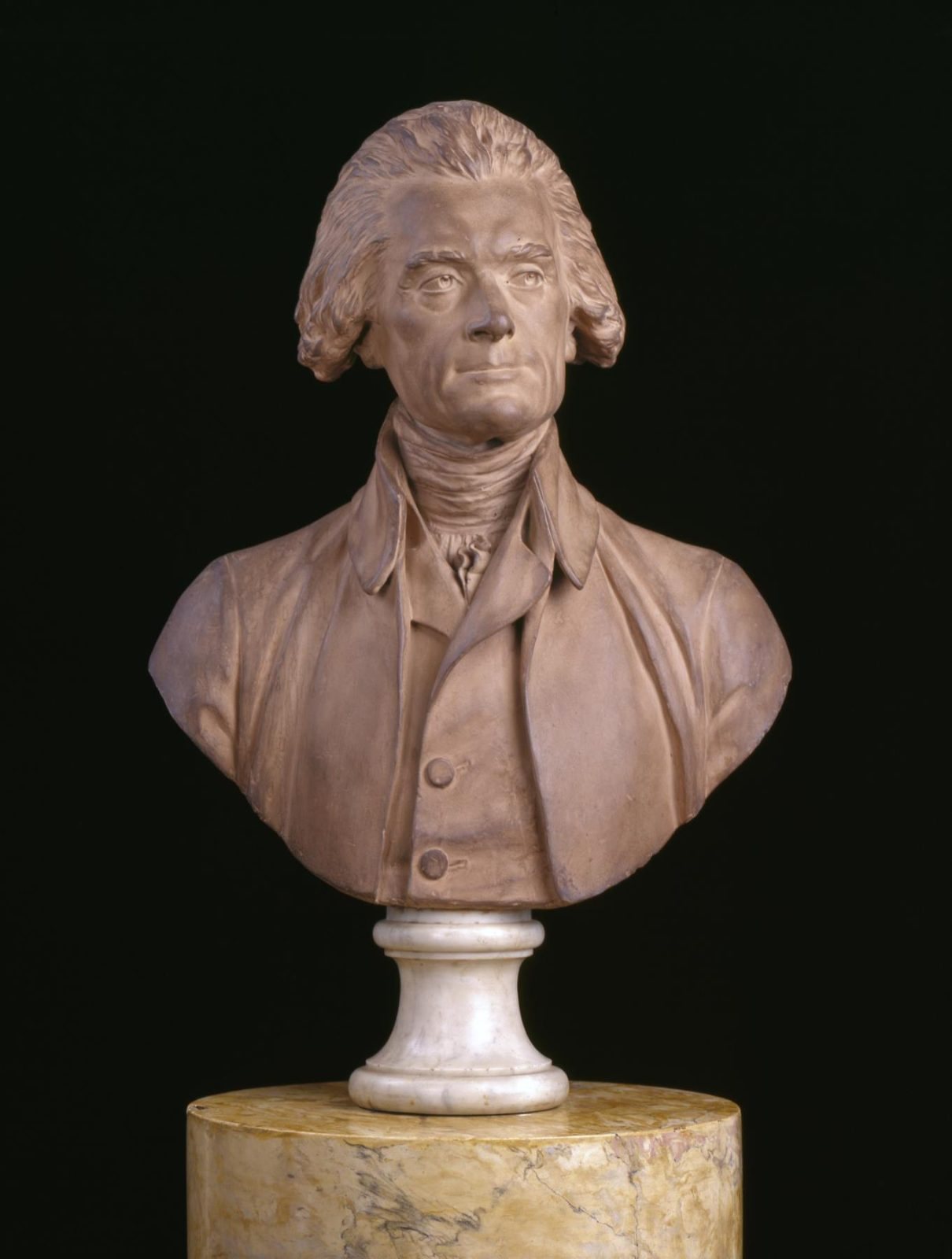
Jean-Antoine Houdon, plaster bust of Thomas Jefferson, 1789
Jean-Antoine Houdon · 1789

Plaster bust, Monticello.


Houdon modeled Jefferson from life in Paris in August 1789. Widely regarded as the best-known likeness — strikingly lifelike, capturing a knowing half-smile and keen intelligence. It became the model for the U.S. nickel.

CollectionThomas Jefferson’s Monticello
Marble copyMuseum of Fine Arts, Boston
Perhaps the foremost artist in the world.Jefferson on Houdon
Giuseppe Ceracchi · 1794
Image not in the public domain
Reproduction requested from Monticello
Giuseppe Ceracchi · 1794

Marble bust, Roman style.


Ceracchi modeled Jefferson from life in Philadelphia in 1791–92, then carved the marble in Florence. Jefferson displayed the colossal bust on a green marble pedestal in Monticello’s Entrance Hall and considered it the chef-d’œuvre of all attempts to portray him. It offers precise cranial volume, brow projection and surface relief that no painting can provide.

CollectionMonticello (original); copies in various collections
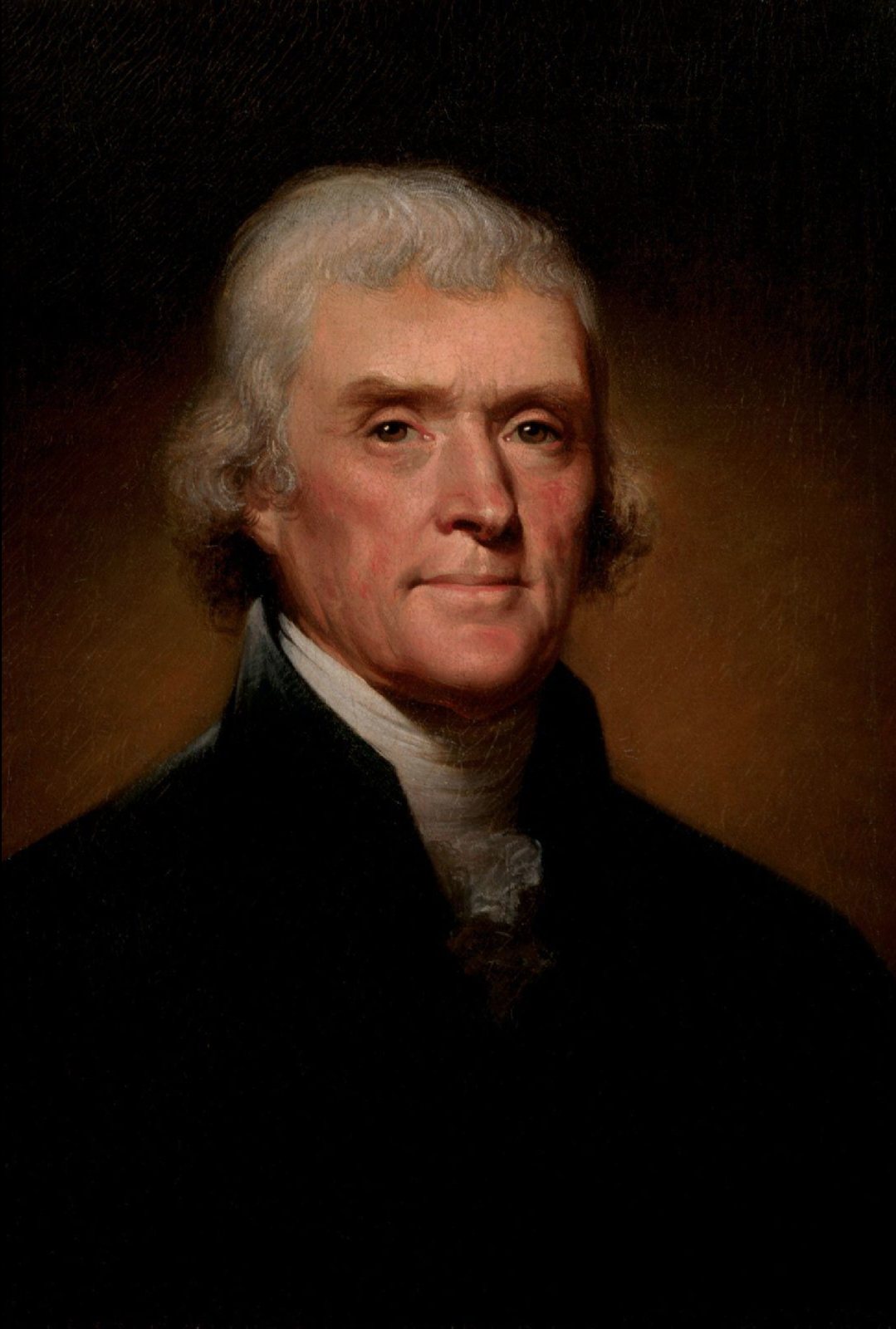
Rembrandt Peale, Thomas Jefferson, 1800
Rembrandt Peale · 1800

Official presidential portrait.


Painted in Philadelphia just before Jefferson’s election, at age 57. Celebrated for its warm complexion and glow of health; the naturalistic palette and relaxed posture distinguish it from formal portraits — the key reference for complexion, skin tone and dignified warmth.

CollectionWhite House Collection
Subject age57 · Philadelphia
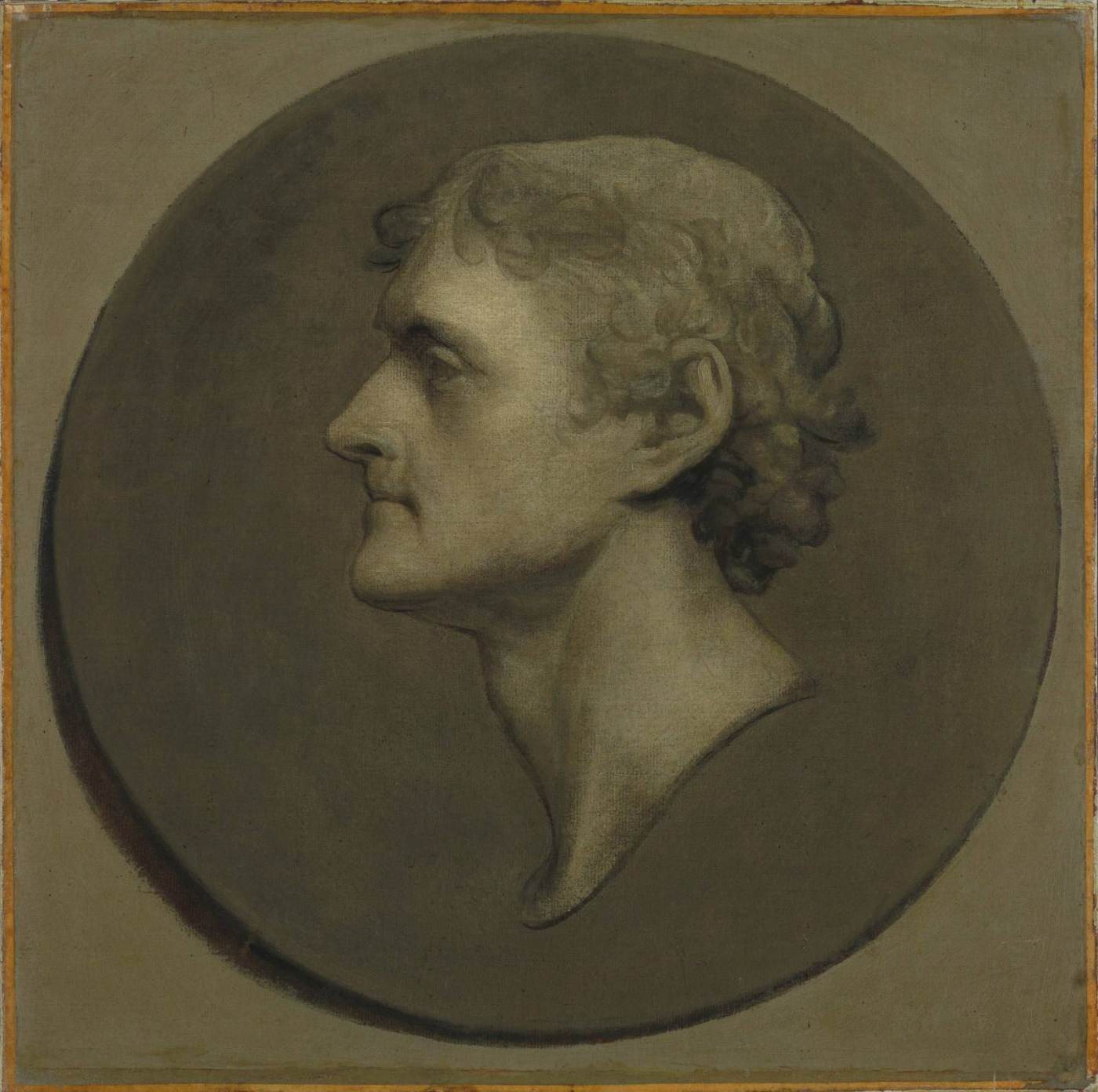
Gilbert Stuart, Medallion Portrait of Thomas Jefferson, 1805
Gilbert Stuart · 1805

The Medallion (profile) portrait.


Jefferson’s own preferred likeness. The profile presents skull, brow ridge and jaw with sculptural precision. A strong aquiline nose, prominent forehead and direct Roman bearing make this the premier source for monumental portraiture.

CollectionFogg Museum, Harvard Art Museums
The best which has been taken of me.Jefferson on the Medallion
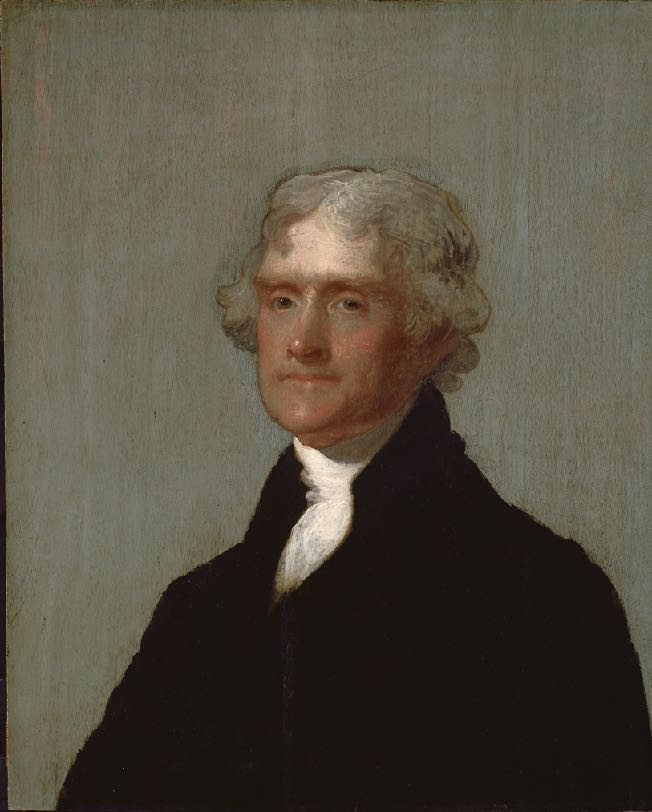
Gilbert Stuart, the Edgehill Portrait of Thomas Jefferson, 1805/1821
Gilbert Stuart · 1805 / 1821

The “Edgehill” portrait.


Considered by Jefferson’s family one of the finest likenesses ever made. Stuart’s brushwork captures coral tones in the cheeks, exposed grey underpainting around eyes and jaw, and a brightly lit forehead revealing skull structure — essential for late-life facial planes and warm expression.

CollectionNational Portrait Gallery and Thomas Jefferson Foundation
UseLate-life facial planes

Enquiries

Offer this portrait a place.

Petrides Public Sculpture · New York & Athens · +1 917 860 0932