Thomas Jefferson, a portrait

The occasion

The United States at 250.

The United States celebrates the 250th anniversary of the adoption of the Declaration of Independence, authored by Thomas Jefferson in 1776. Institutions on both sides of the Atlantic are marking the year with programming on the founding era.

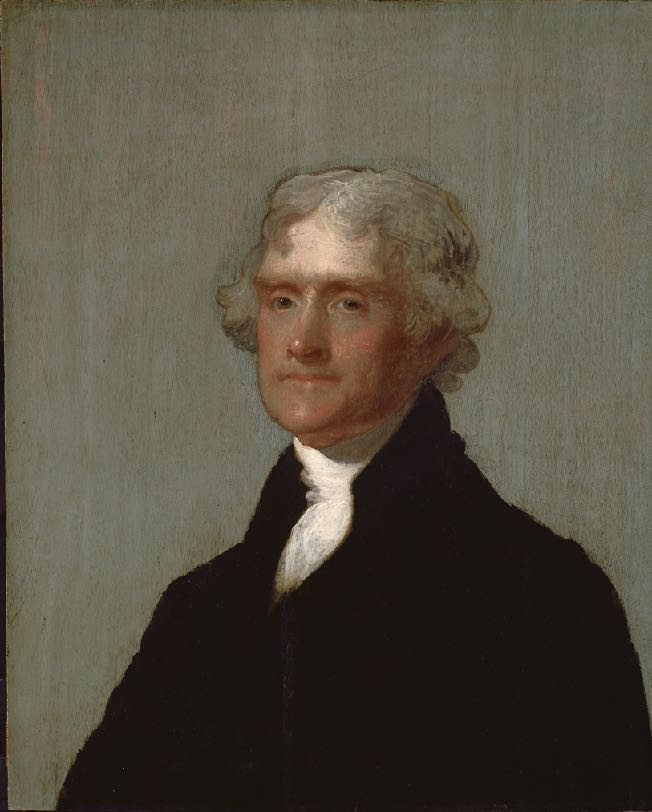
Gilbert Stuart, the Edgehill Portrait of Thomas Jefferson, 1805/1821
Gilbert Stuart · Edgehill Portrait · 1805/1821

The subject

Thomas Jefferson, 1743–1826.


Thomas Jefferson is among the most consequential figures in American history: a statesman and diplomat, but also an architect, classicist, naturalist and writer whose range of learning was extraordinary even among his contemporaries.

As a delegate to the Second Continental Congress he was the principal author of the Declaration of Independence in 1776. During the Revolution he served as a legislator and Governor of Virginia. He served as U.S. Minister Plenipotentiary to France, and went on to become the first Secretary of State, the second Vice President under John Adams, and the third President of the United States for two terms.

He designed Monticello and the campus of the University of Virginia, which he founded; his library of 6,487 volumes, purchased by Congress in 1815, became the nucleus of the Library of Congress collections.
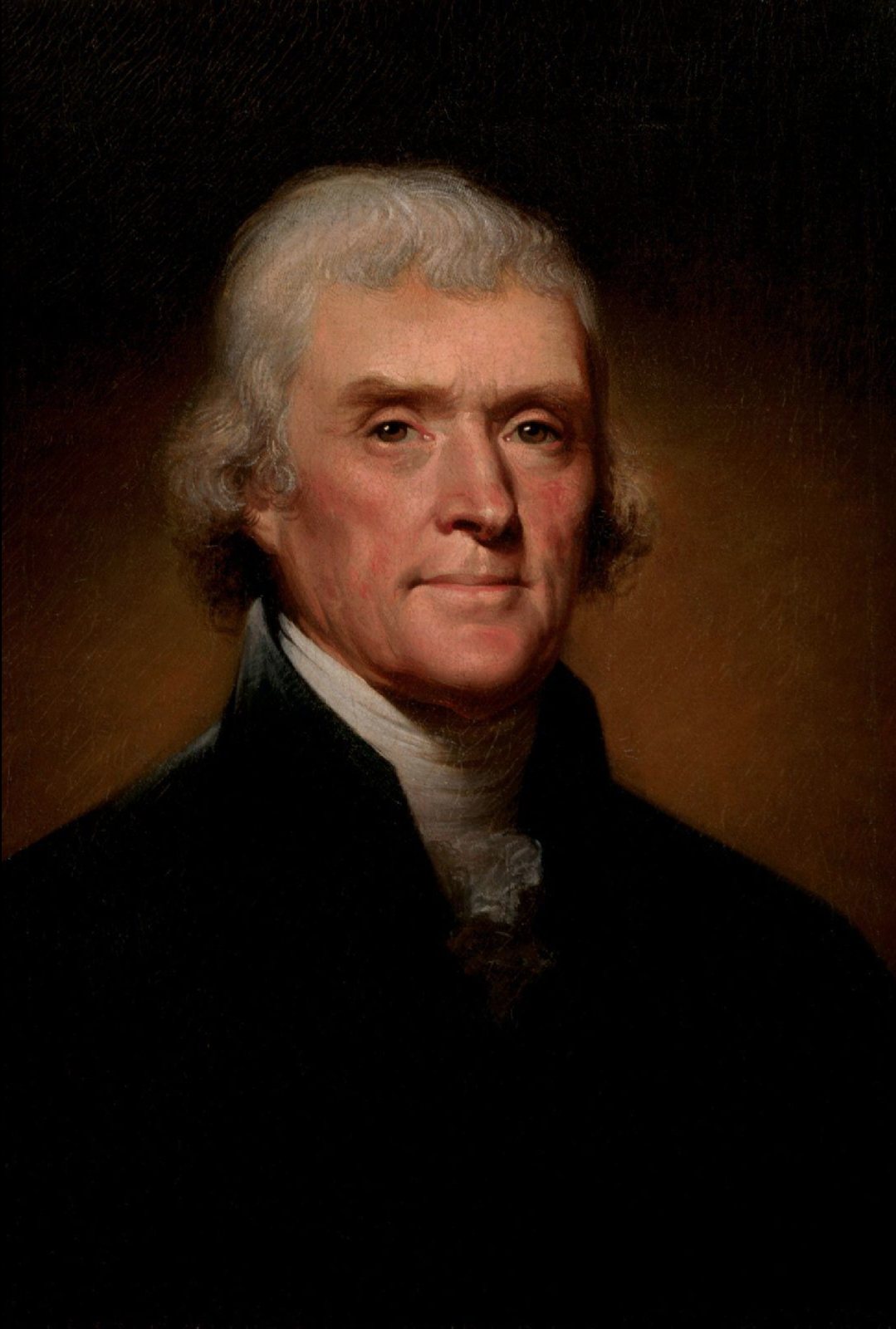
Rembrandt Peale, Thomas Jefferson, 1800
Rembrandt Peale · Thomas Jefferson · 1800

Jefferson and Greece

The American who looked to Greece.


Jefferson read Greek and Latin and drew on the political thought of the ancient republics throughout his life. He modeled Monticello and the University of Virginia on Greek and Roman temple architecture, embedding Hellenic ideals into the physical fabric of the new nation.

He also corresponded directly with Adamantios Korais about using the American model to establish modern Greece — a real exchange between the author of American independence and an architect of Greek nationhood.

The sculptor is Greek-American, born in Athens and working between Athens and New York. A Jefferson by his hand carries that dialogue in its making.

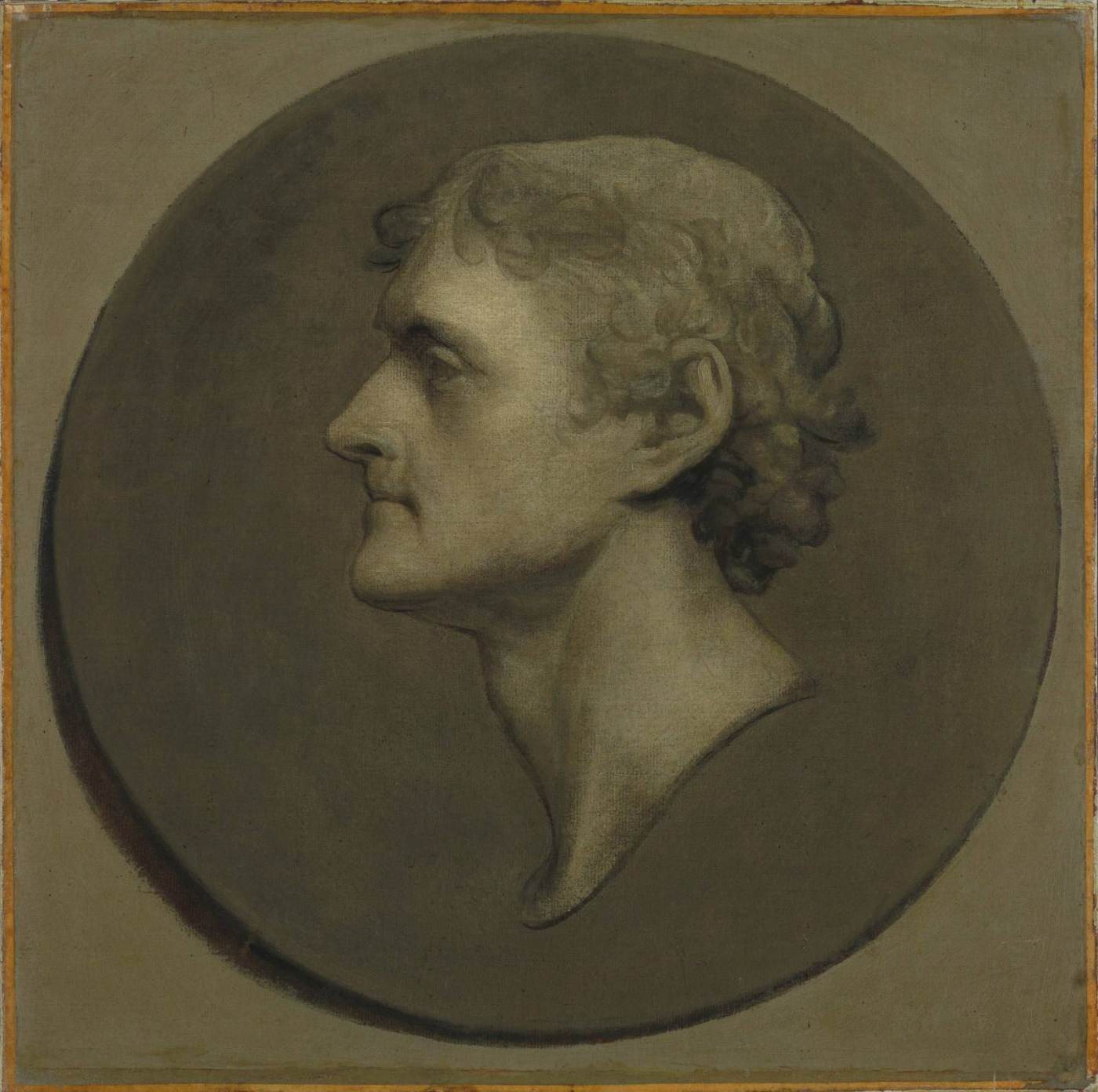
Gilbert Stuart, Medallion Portrait of Thomas Jefferson, 1805
Gilbert Stuart · Medallion Portrait · 1805

Jefferson and France

An American in Paris, 1785–1789.


Congress sent Jefferson to Europe in 1784 to negotiate commercial treaties, and on May 17, 1785, he presented his credentials as Minister Plenipotentiary to France, succeeding Benjamin Franklin. He served in Paris until September 1789.

While in Paris he acquired books, scientific instruments, plants and architectural drawings for shipment home. He traveled to Nîmes to study the Maison Carrée and took it as the model for the Virginia State Capitol; the Hôtel de Salm on the Seine influenced his redesign of Monticello. He was in the city as the French Revolution began, and the Marquis de Lafayette consulted him on drafts of the Declaration of the Rights of Man.

Enquiries

Offer this portrait a place.

Petrides Public Sculpture · New York & Athens · +1 917 860 0932